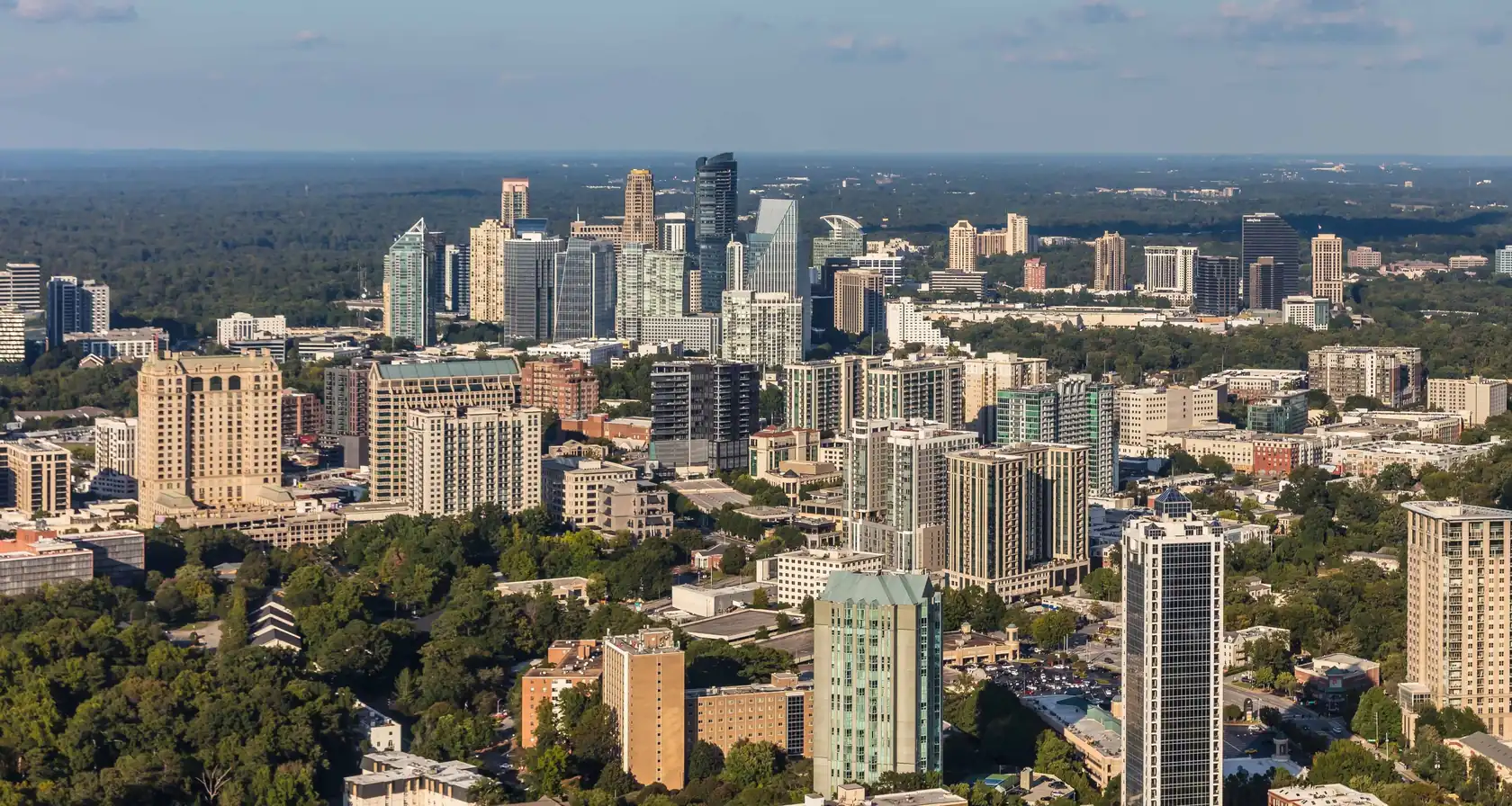
If you are looking at a Buckhead house with plans to tear it down or add on, the trees on the lot belong in your budget from the first showing. Atlanta regulates removing trees on private property, and its ordinance puts a dollar value on each inch of a healthy tree that comes out.
Atlanta City Council unanimously adopted a new Tree Protection Ordinance (Ordinance 24-O-1691, replacing City Code Chapter 158, Article II) on June 16, 2025. (City of Atlanta, checked 2026-10-19)
The City says the second phase of the Tree Protection Ordinance took effect January 1, 2026. (City of Atlanta, checked 2026-10-19)
Check the date on anything you read about the tree rules. The ordinance in force is 24-O-1691, adopted in June 2025, with its second phase in effect since the start of 2026. Guides written before then describe the old Chapter 158 text.
Which trees need a permit
Under Atlanta's tree ordinance, no one may remove, destroy or 'impact' a regulated tree on private property without a permit from the City Arborist. On private property, a regulated tree is any non-pine tree 6 inches or more in diameter at breast height (DBH), or any pine 12 inches or more. (City of Atlanta, checked 2026-10-19)
Diameter at breast height is a trunk measurement an arborist takes standing at the tree. Ask for it in inches on any tree survey you are given, with the species, because the threshold depends on whether the tree is a pine.
The word “impact” is the one rebuild buyers tend to miss. The ordinance covers impacting a regulated tree as well as removing it, so a tree you plan to keep can still be part of the permit conversation if your grading, driveway or utility trench runs near it. Ask the City Arborist how your plan will be treated before you assume a tree is safe because you are not cutting it.
What a useful tree survey shows
- Every tree at or above the permit thresholds, located on the lot survey rather than sketched.
- The species of each one, or at least whether it is a pine, since the threshold depends on it.
- Diameter at breast height in inches, measured, not estimated from a photo.
- The arborist’s note on health, so you can tell which trees are healthy and which may be dead, diseased or hazardous.
- Large trees on the neighbors’ side of the line whose roots and canopy reach your building area.
A survey like that takes the guesswork out of the conversation with the City and gives you something to price before your due-diligence period ends.
The 2026 recompense and how it changes
Under the new ordinance, the established recompense value for removing a healthy tree is $140.00 (per diameter inch, per the ordinance's worked example), effective January 1, 2026. From January 1, 2027 it adjusts each year for Atlanta-area inflation (CPI-U). (City of Atlanta, checked 2026-10-19)
Two details in that fact matter. First, the figure is tied to a year. The $140.00 value took effect on January 1, 2026, and from January 1, 2027 it moves each year with Atlanta-area inflation, so a number you work out now may not be the one that applies when you pull permits. Second, the per-inch unit comes from the ordinance’s worked example. Confirm with the Arborist Division how the trees on your plan will be counted before you rely on a total.
The value in the fact is for healthy trees. If the lot has trees that are dead, dying, diseased or hazardous, those go through a separate application, described below, and you should ask the City how they are treated.
How removal permits work
The City of Atlanta Arborist Division (Department of City Planning) protects the tree canopy on private property. Tree removal is permitted either under a building permit or through an application to remove a dead, dying, diseased or hazardous tree, and properties are posted before removal under building permits so the public can appeal. (City of Atlanta, checked 2026-10-19)
For a buyer planning to rebuild, the building-permit route is the one that matters. Because the property is posted before trees come down, the public sees the planned removals and can appeal them. Build that notice period, and the chance of an appeal, into your schedule rather than your contractor’s start date.
Appeals
Tree decisions by a City official can be appealed to the Tree Conservation Commission; the City lists 404-330-6235 for appeal information. (City of Atlanta, checked 2026-10-19)
Appeals can come from either side. You can appeal a City decision on your own permit, and a posted removal on a lot you are building can be appealed by others. The Arborist Division page is the place to start for forms and current contacts.
Only inside the City of Atlanta
These are City of Atlanta rules. A lot with an “Atlanta, GA” mailing address in Sandy Springs or Brookhaven follows that city’s tree rules instead, so confirm the parcel’s tax district first. Our article on Atlanta addresses that are not in Atlanta shows how.
Before you buy a lot to rebuild
- Ask the seller for any tree survey, arborist report or past tree permit for the lot, and whether any recompense was paid.
- Have a certified arborist or a surveyor map every tree at or above the permit thresholds, with species and diameter in inches.
- Lay your house, driveway and utility lines over that map, and mark which trees would be removed and which would be impacted.
- Add up the inches of healthy regulated trees you expect to remove and multiply by the recompense value for the year you expect to pull permits. Treat the result as a planning figure until the City confirms it.
- Take the plan to the Arborist Division during your due-diligence period, and ask how posting and any appeal would affect your start date.
- Check the lot’s planning unit and zoning separately. Trees are one part of what you can build, and our tree permits and NPUs guide covers the rest of the review path.
Do not remove or prune anything before closing, and do not let a contractor start clearing on a promise that the permits will follow. Until the deed records, the trees are the seller’s, and so is the decision about them.
If you are weighing a teardown, an agent can help you line up the tree survey and the City conversation inside your due-diligence window. Read how Gold Peach Realty works with buyers for how that works.
Questions buyers ask
Do I need a permit to cut down a tree on my Buckhead lot?
Usually, yes. On private property in Atlanta, removing or impacting any non-pine tree 6 inches or more in diameter, or any pine 12 inches or more, needs a permit from the City Arborist.
Source: City of Atlanta
How much is Atlanta’s tree recompense in 2026?
The established recompense value for removing a healthy tree is $140 per diameter inch, effective January 1, 2026. It adjusts each year for inflation from January 1, 2027.
Source: City of Atlanta
When was Atlanta’s current tree ordinance adopted?
The City Council adopted the new Tree Protection Ordinance (24-O-1691) on June 16, 2025, and the City says its second phase took effect January 1, 2026.
Source: City of Atlanta
Next step: browse Buckhead luxury homes and the Tuxedo Park and Paces and Mount Paran guides with the tree questions ready, and run any lot through the due-diligence checker.
Written by the Buckhead Atlanta Homes Editorial Team. AI tools help us draft; people check every fact before it publishes.
Rules, rates and maps change. Every rule on this page links to the office that sets it; confirm with that office before you rely on it.